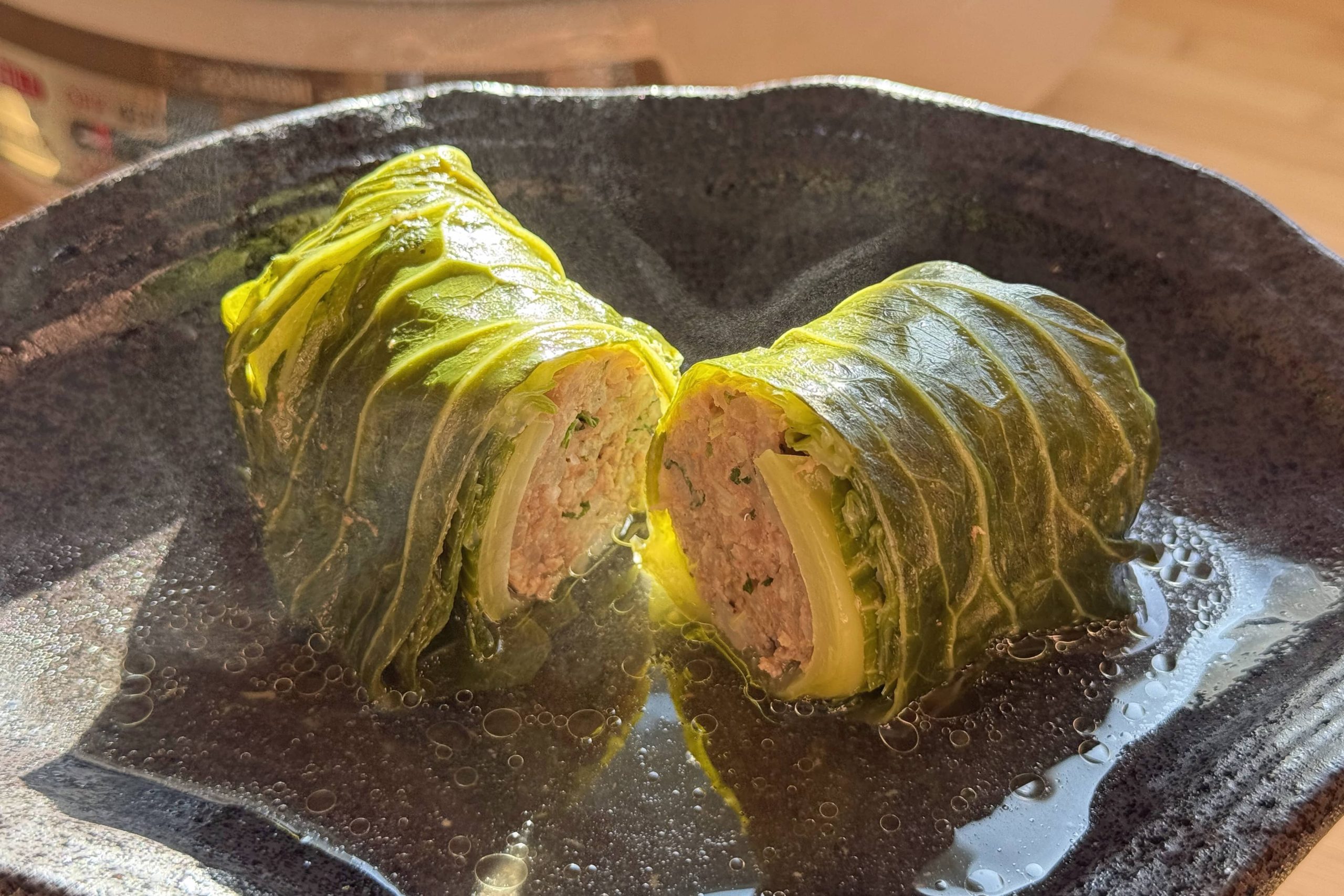
Welcome to another New Year! Hopefully it’s not the same as last year? Every year, people around the world wish for the same things—good health, prosperity and happiness. And we make sure that it all comes true by starting the year with the foods that will bring us good fortune.
In a lot of European countries, cabbage rolls are a thing—the green cabbage symbolizes money, and they’re stuffed with ground beef or pork. Pork is favored because pigs naturally root for food with their snouts (did you know this?), and they do it by digging forward, which represents progress. Chickens aren’t so great because they scratch the ground backward, and nobody wants to go backward on the first day of the year!
Now, a lot of you may not have cabbage at the top of your favorite vegetables list, and I didn’t either, but that changed when I lived in Japan. I used to go to this student diner type hole-in-the-wall where their specialty was rolled cabbage in white sauce. I’ve never been able to find the exact same amazing dish since. This recipe is from Skandibaking, a Swedish stuffed cabbage called Kaldolmar. Very tender, very juicy, very brothy and very hearty.
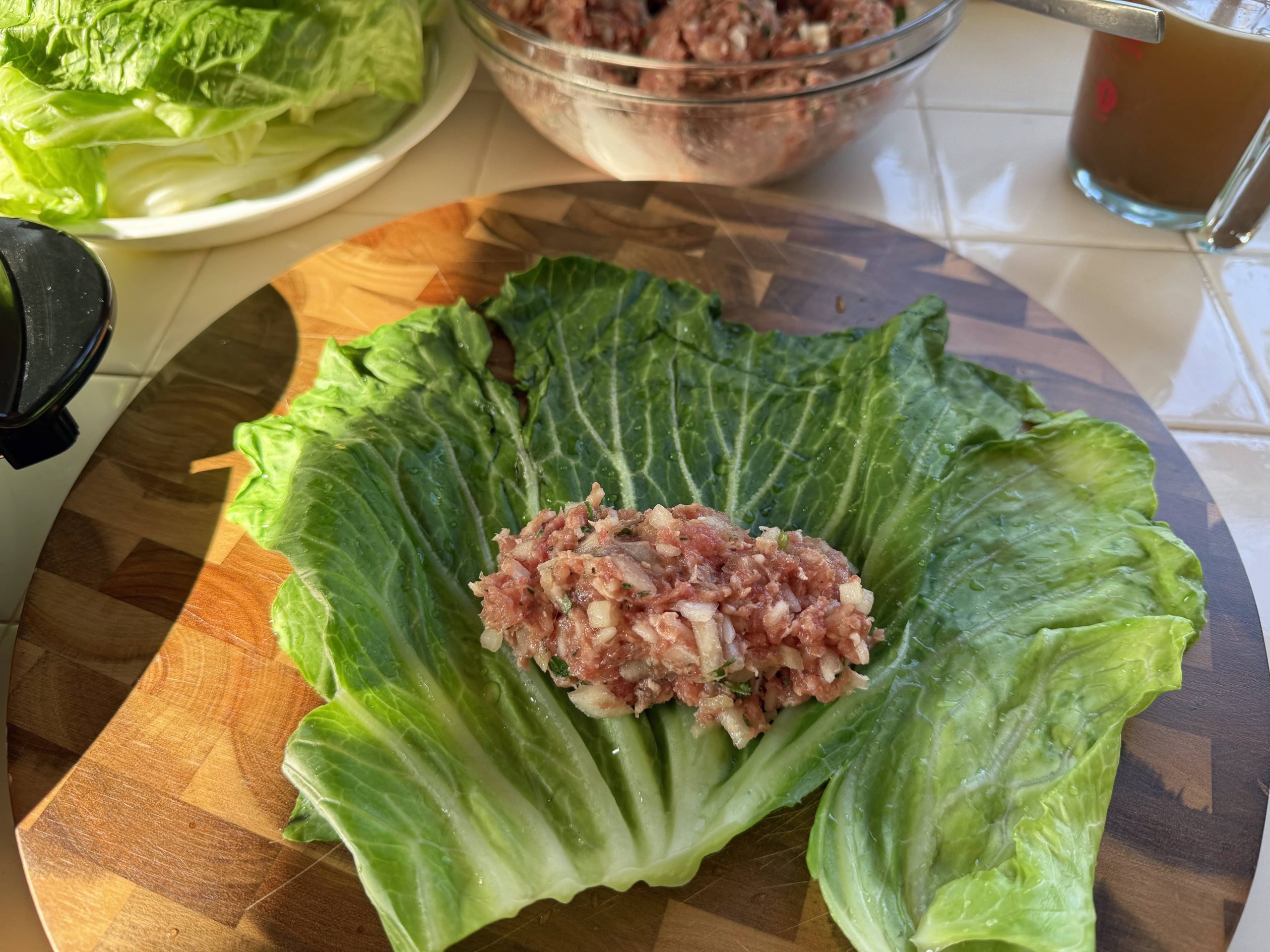
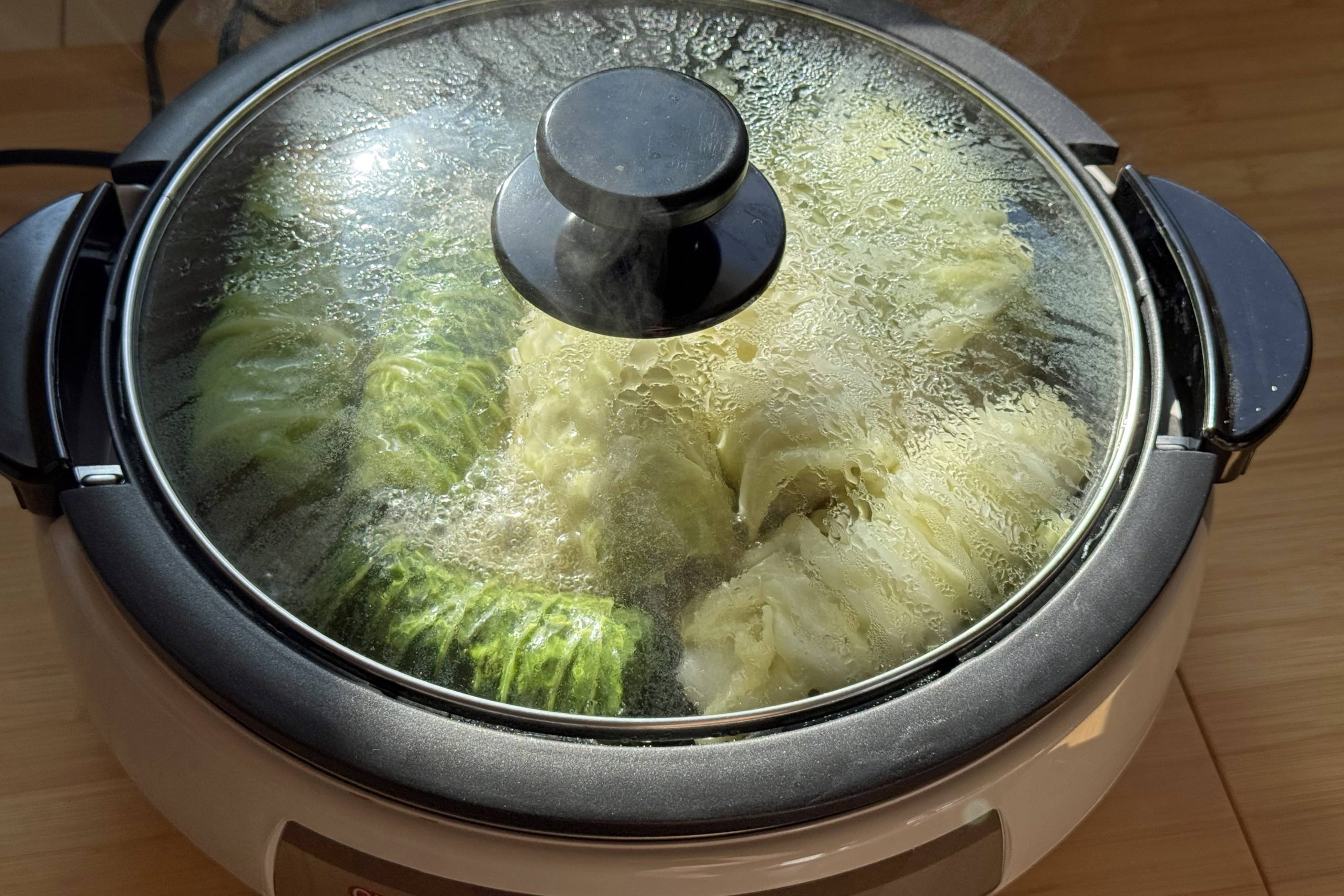
The Zojirushi Electric Skillet works very well for this dish, quickly cooking with controlled heat then keeping it simmering until we were all ready to reach in and grab a roll.
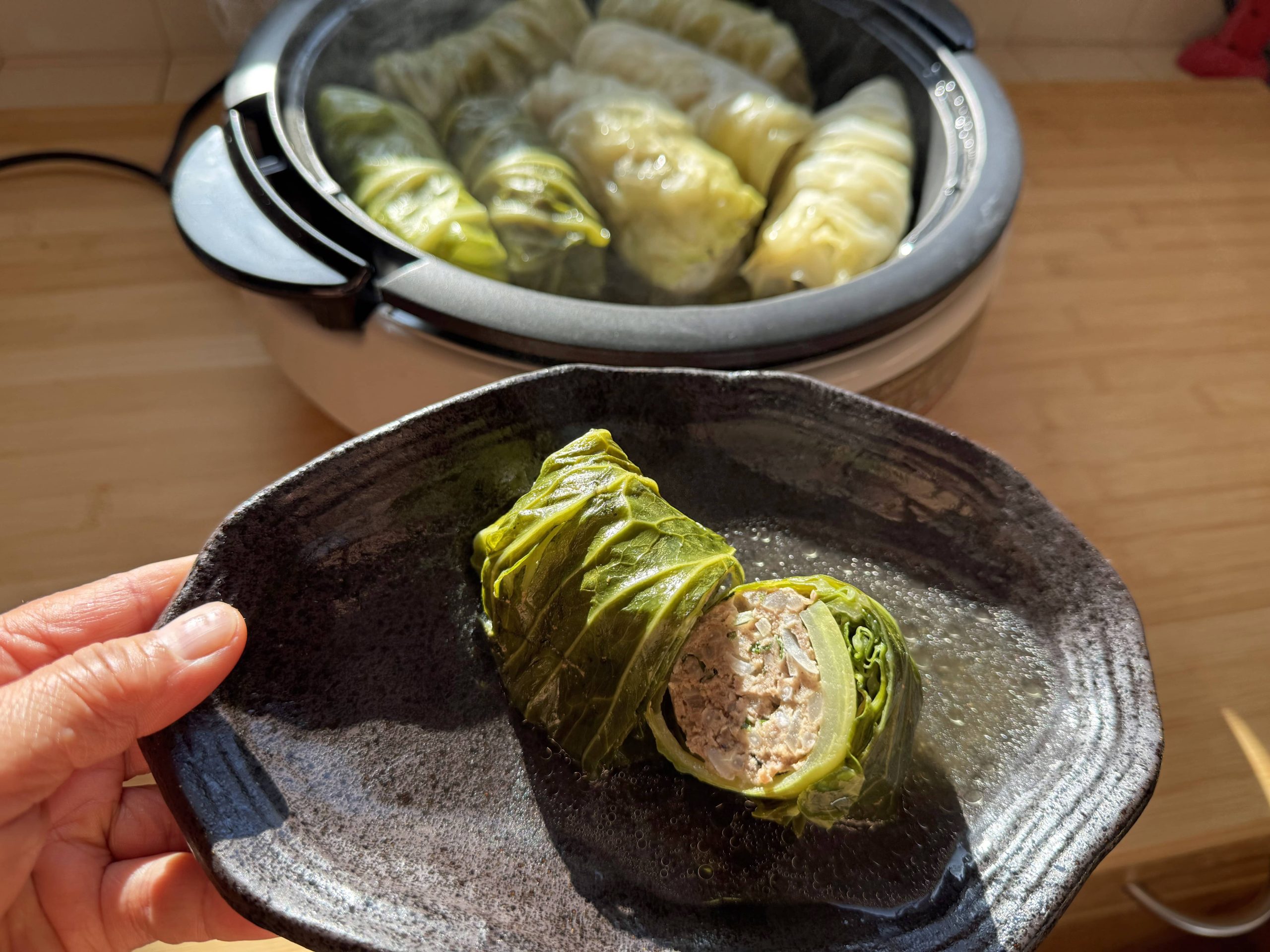
What makes the meat inside so soft to eat is the mixture with cooked rice—it still has texture, but blends perfectly with the soft cabbage leaf and bursts with juiciness when you bite it. And you don’t have to struggle with the cabbage either.
Here in the U.S., southern folks have a tradition of black-eyed peas and collard greens. The peas represent coins, and the greens are the cash money. Pork and bacon make their appearance again in this dish, and you can tell by the ingredients it’s pretty simple.
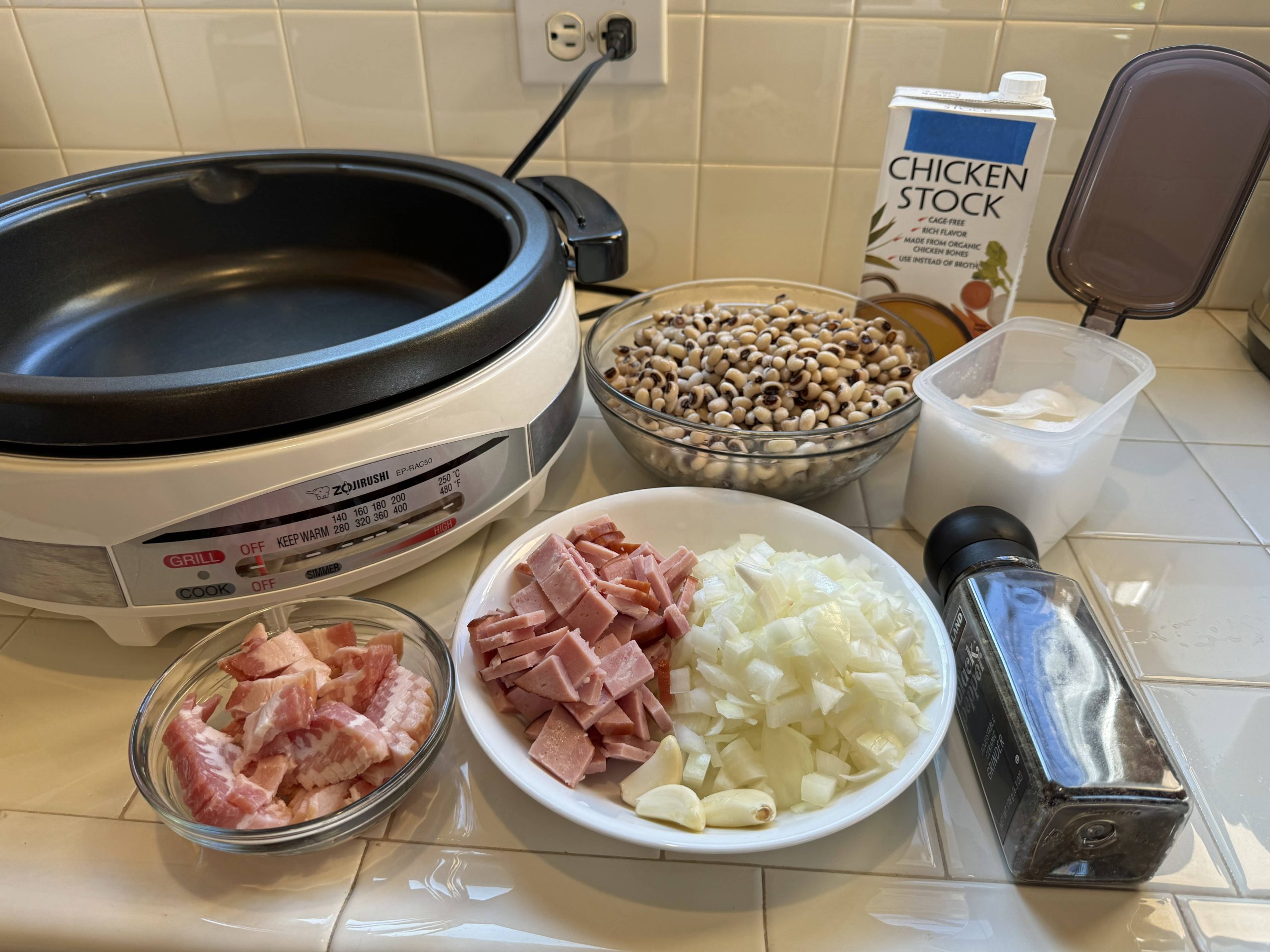
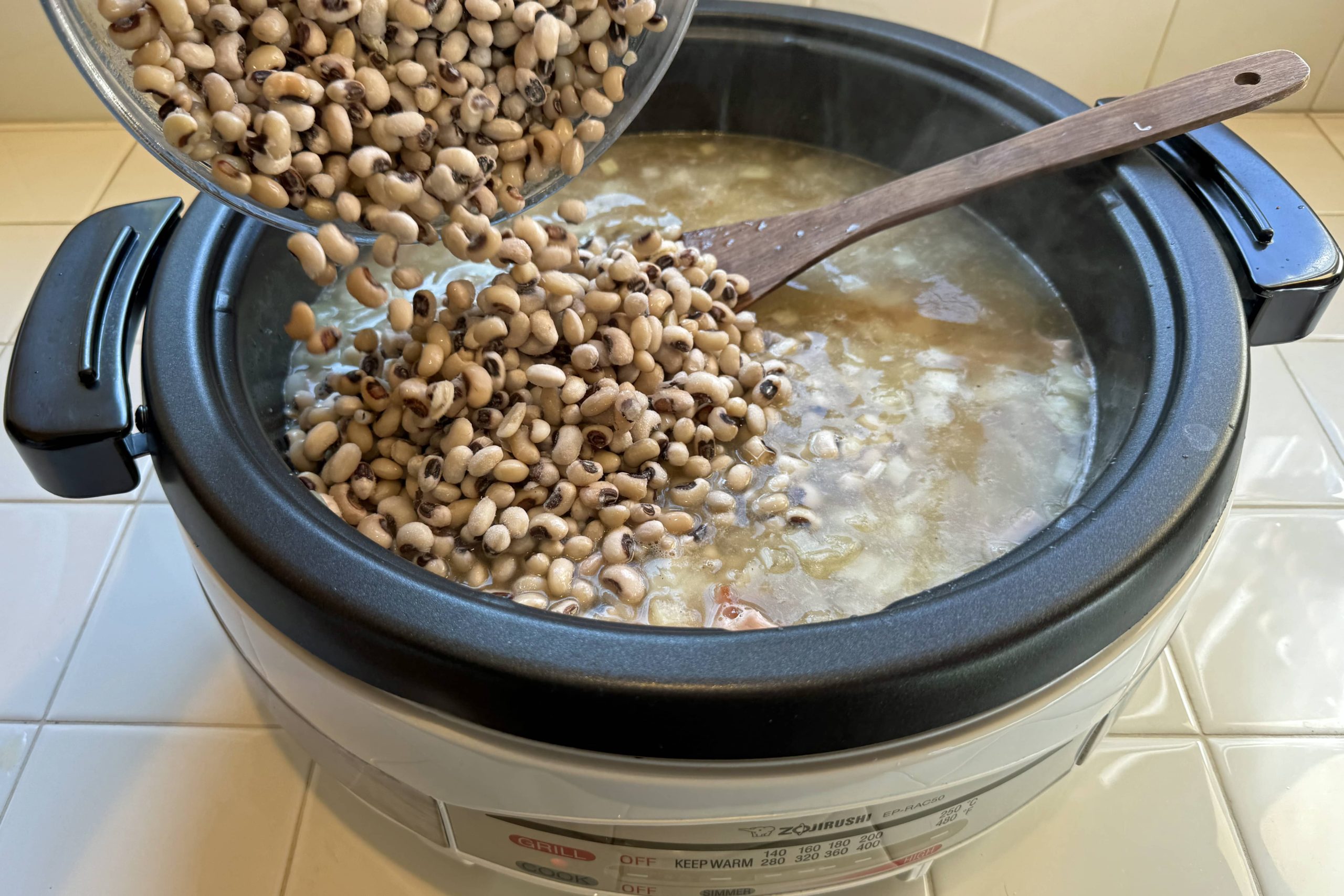
We made this from Soulfullymade, using frozen black-eyed peas that we never knew existed. It’s better than canned because all the nutrients are still there, and it’s easier to deal with than reconstituting dried peas. The heart of the flavor in this dish is the ham, and the bacon that adds the smokiness.
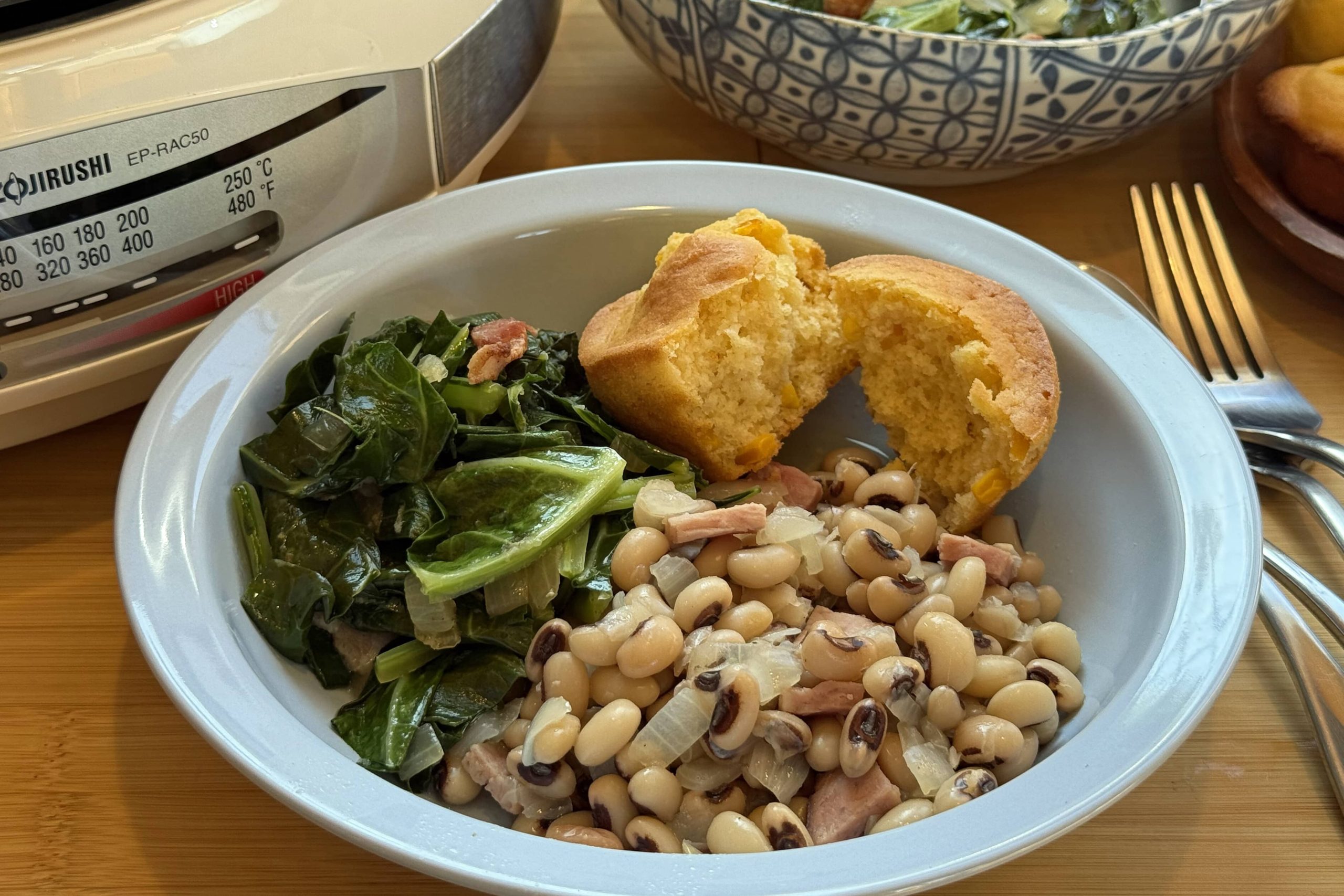
Then just find a good recipe for collard greens and bake some cornbread for an authentic Southern style New Year’s lucky meal.
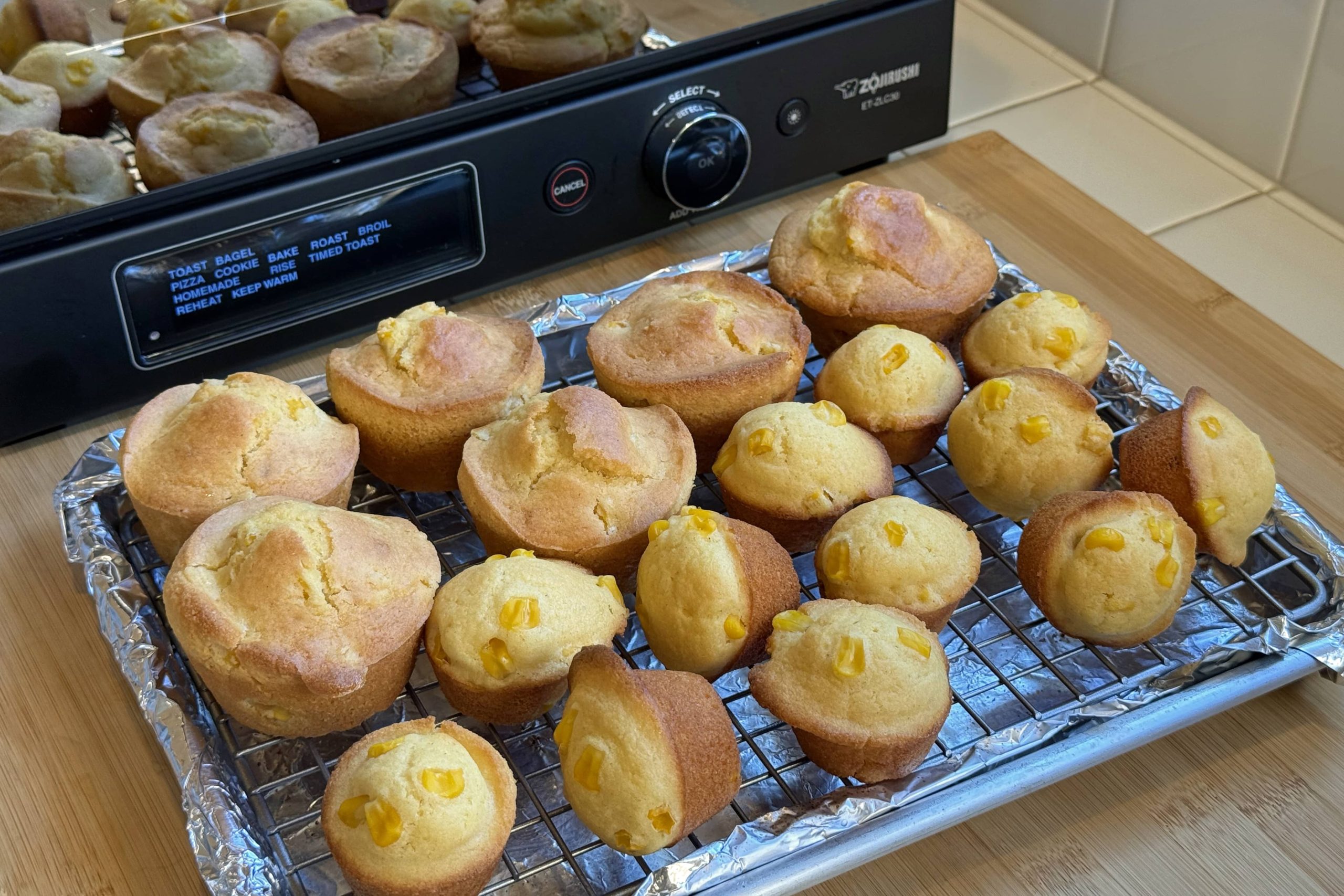
Cornbread is so good—and it’s lucky because it looks and tastes just like pure gold.
Have you seen movies where the Chinese family gets together on the Lunar New Year to make dumplings? They’re symbols of wealth and good fortune because they resemble ancient gold ingots. Koreans also have their own version called mandu, which they eat with oval shaped rice cakes that look like coins. Mandu was introduced to Korea from China during the 14th century, so it kinda all makes sense. The custom didn’t reach Japan, however, because we don’t follow the same tradition on our New Year.
I did see how folding dumplings could be a fun, wholesome activity that the entire family (even the kids) can participate in. With a little bit of practice anyone can do it—the trick being not to overload it.
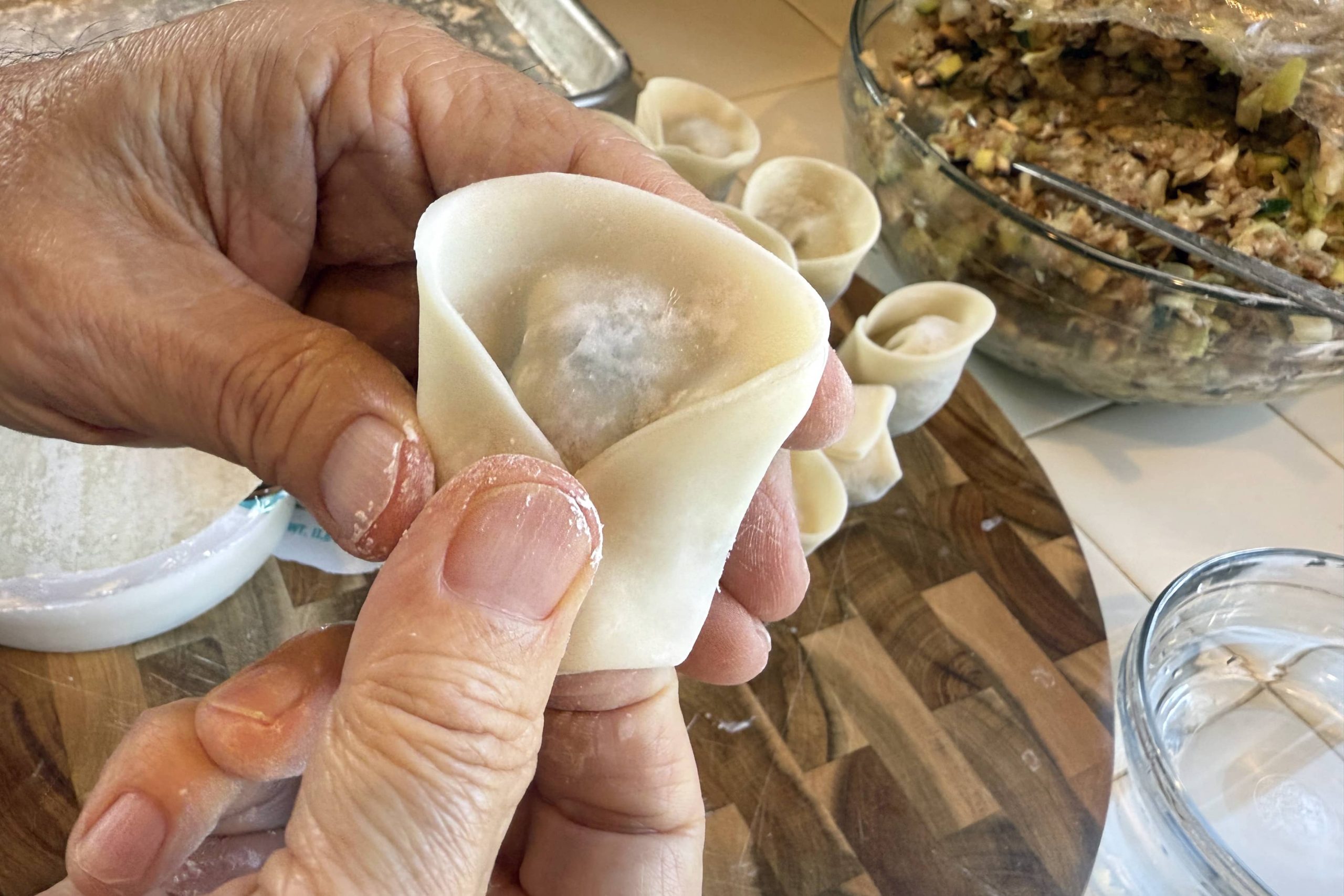
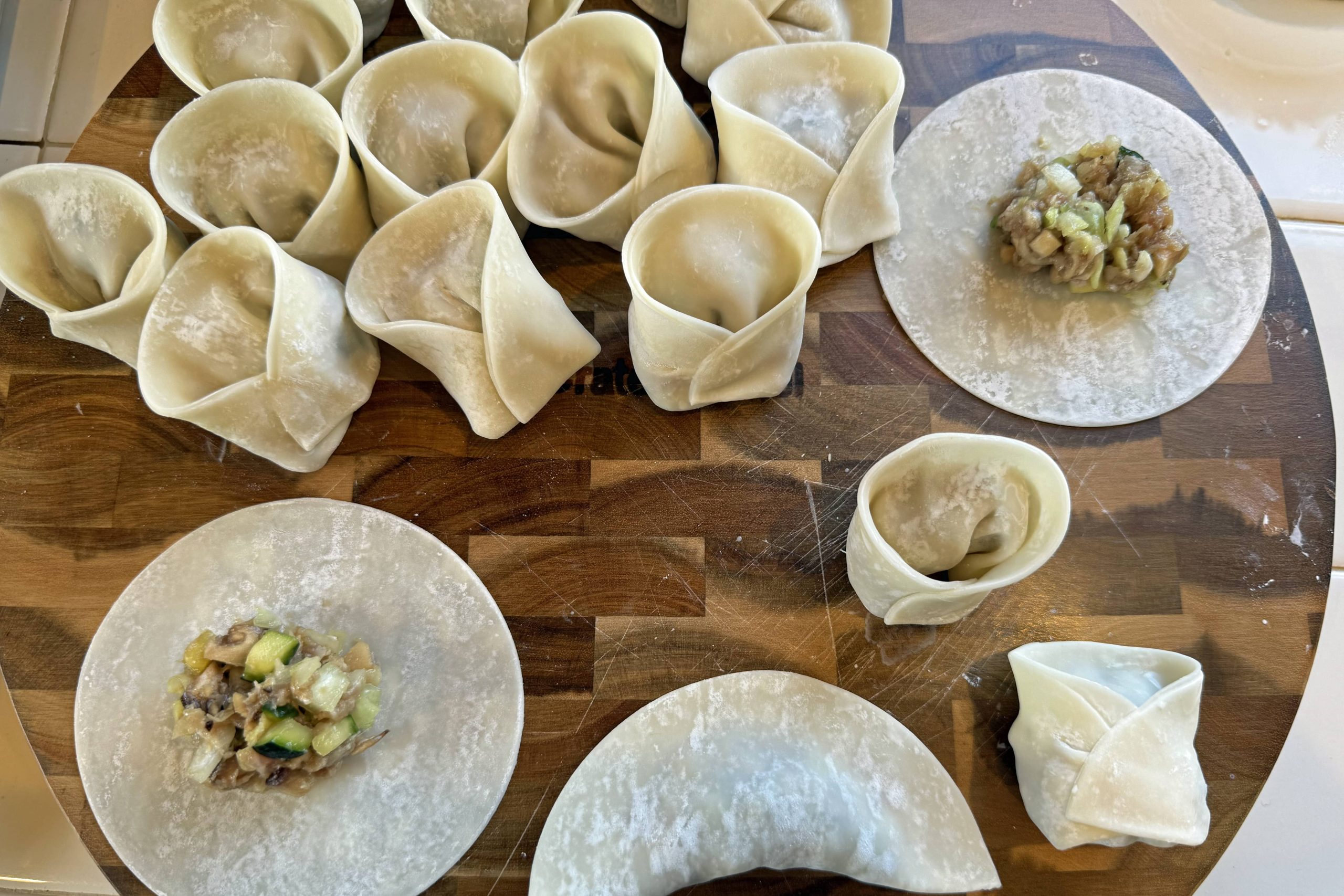
I made a little army. Trust me, once you start, it’s hard to stop.
This is a Korean rice cake soup with dumplings called Tteok Mandu Guk. It’s a warm, soothing soup that uses a recipe from Koreanbapsang. You can see all the good fortune and long life bubbling in the pot, can’t you? You’re supposed to eat a bowl to add one year to your life, so no harm in going for seconds. The white oval rice cakes also represent purity and a clean, fresh start to the new year.
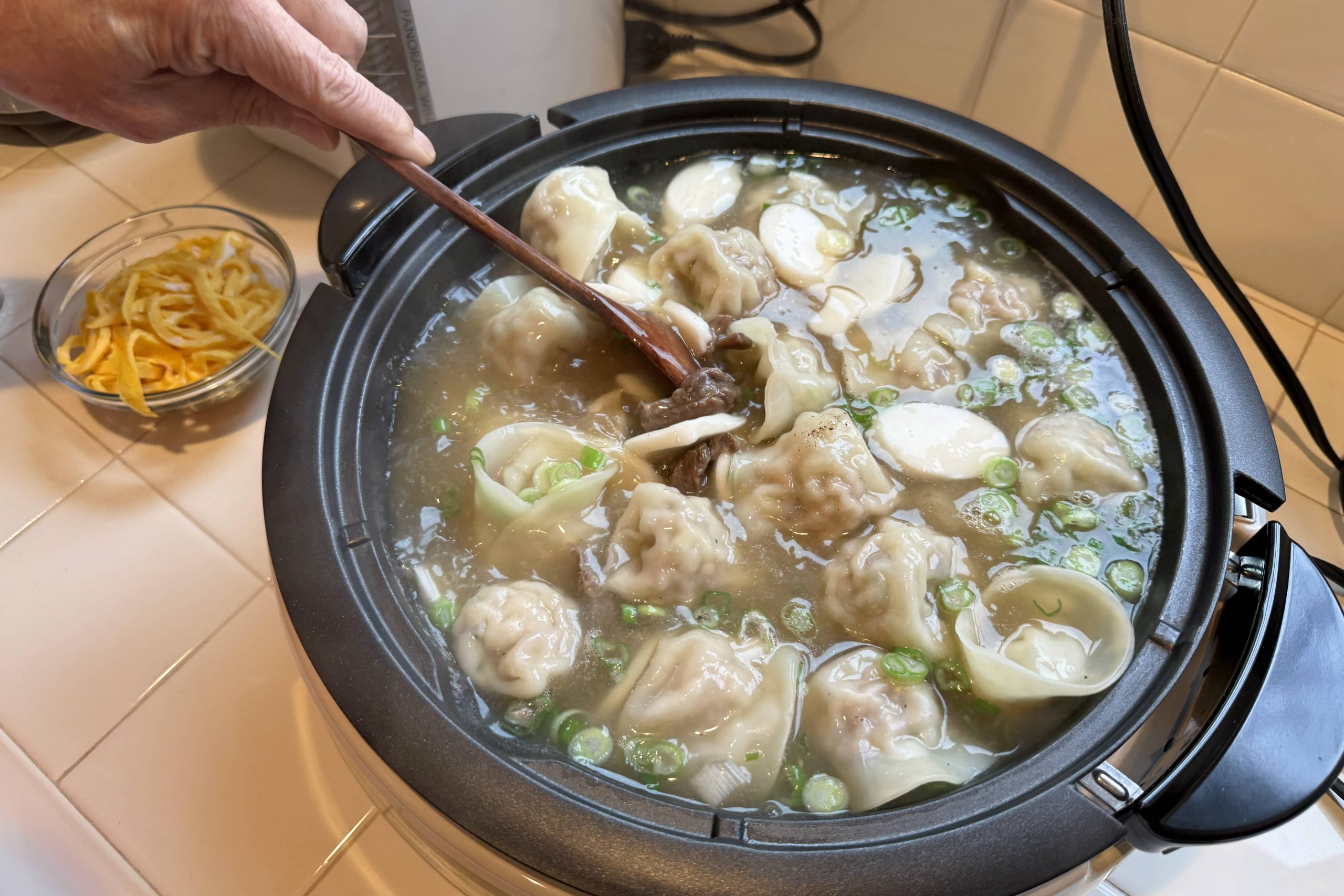
Tteok Mandu Guk

The Germans eat a pretzel bread called Neujahrsbrezel on New Year’s to bring good luck, heath and prosperity. The bread symbolizes unity and abundance, with the knotted shape meant to represent a monk’s arms crossed in prayer for blessings and peace.
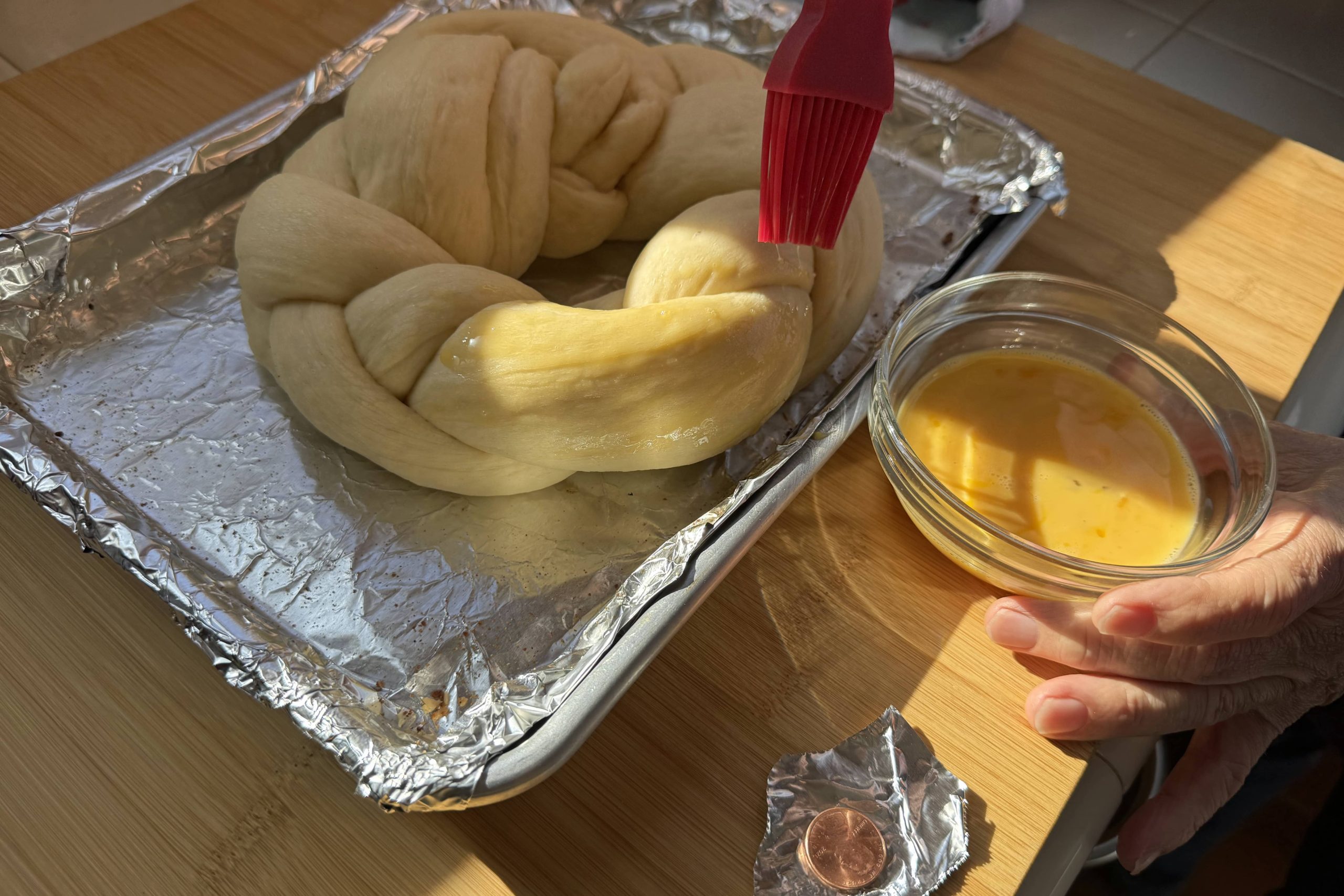
I used my Zojirushi breadmaker to make the dough on the bread/pizza setting (course 11) if you own one. Or you might have a similar dough setting on yours. We enlisted my daughter’s help because I have no idea how to make a braid.
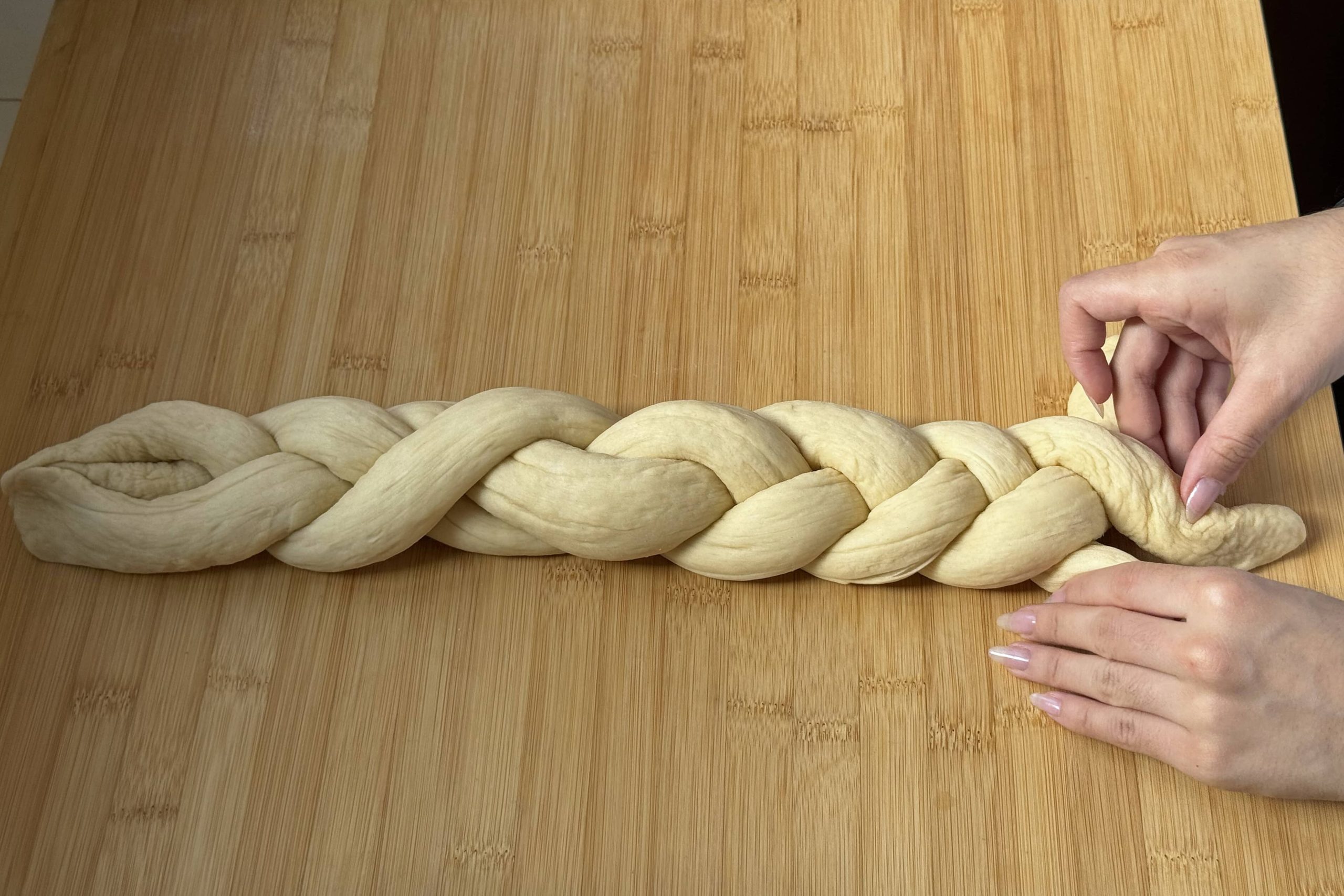
Follow the instructions to make sure it rises properly and add the egg wash before baking. Traditionally, a small one-cent coin is wrapped in foil and inserted into the dough first. When you break the bread to eat it, whoever finds the coin in their portion will have good luck for the rest of the year.
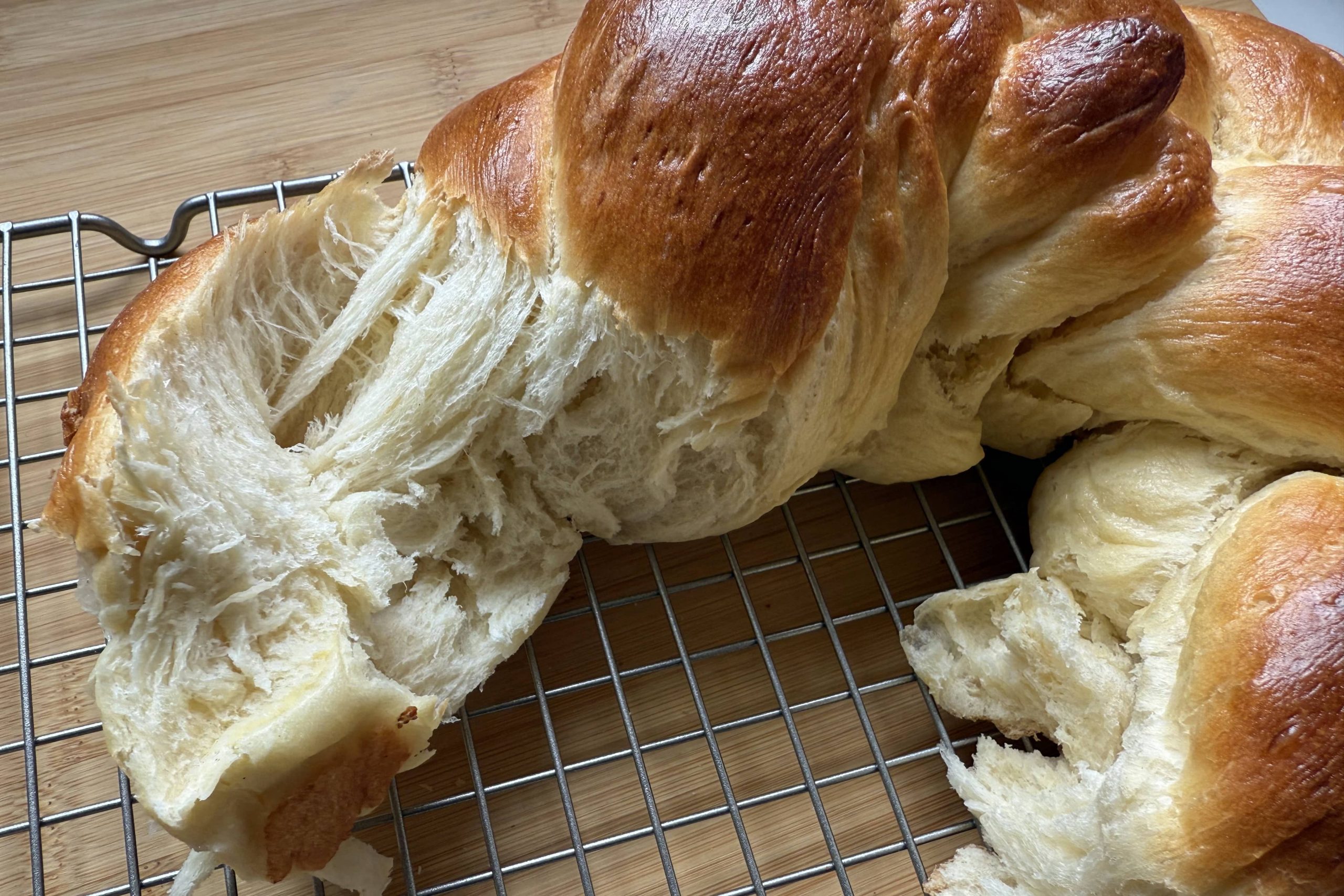
That’s a good looking pretzel bread.

Soft and stretchy on the inside too.
What kind of New Year’s traditions do you have at your house? I love holding on to Japanese traditions, so I’m all about noodles for long life, mochi for strength and I like to toast the new year with sake, just like my Dad used to do for me when I was in high school.
Products used in this post: Micom Toaster Oven ET-ZLC30, Gourmet d’Expert® Electric Skillet EP-PBC10, Gourmet d’Expert® Electric Skillet EP-RAC50, Home Bakery Maestro® Breadmaker BB-SSC10
Please note that these recipes were not tested by Zojirushi America
All images by Bert Tanimoto ©2026

Leave a Reply