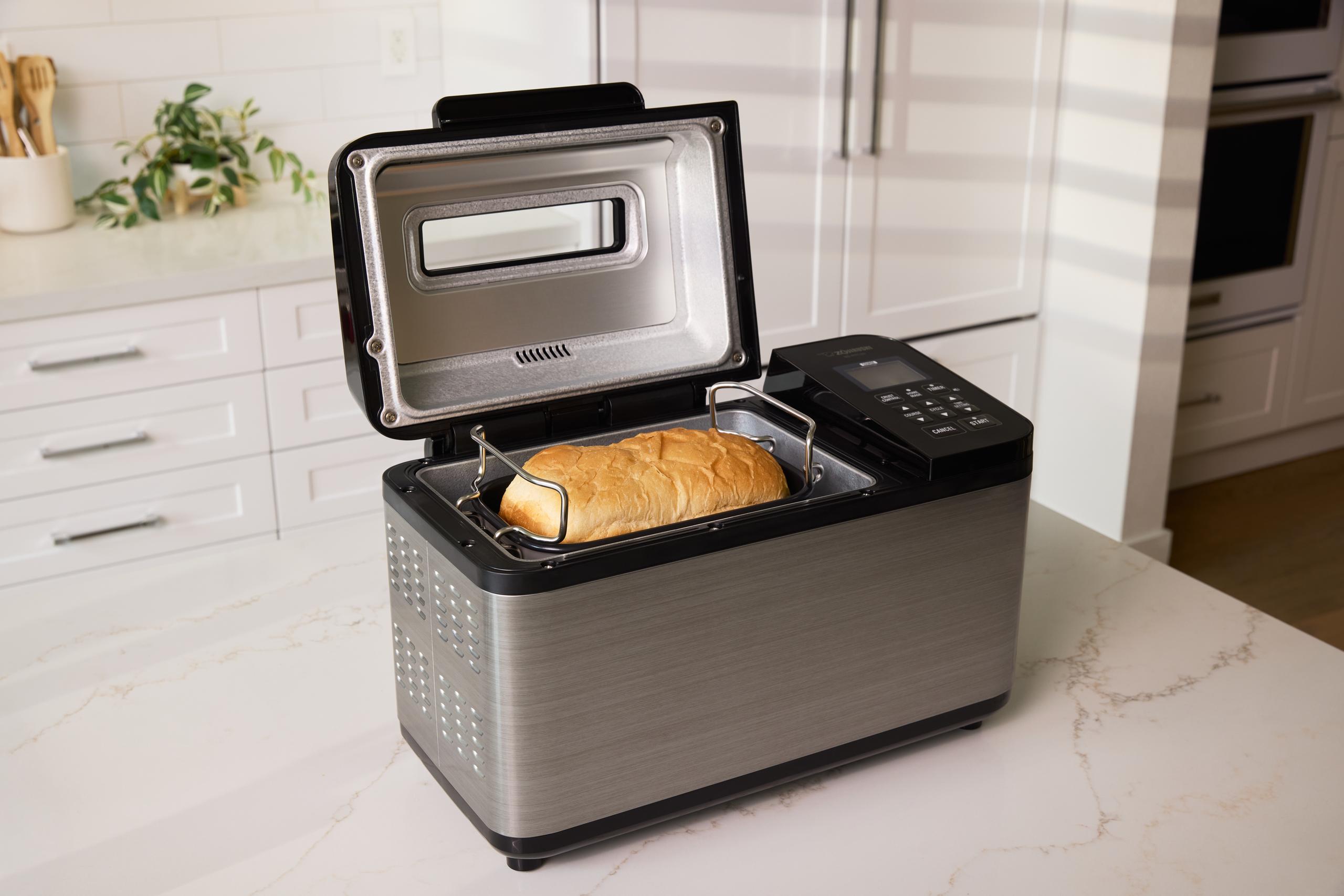
Fresh bread at home sounds like it should require skill, time, and patience, right? But the Zojirushi Home Bakery breadmaker lineup makes the case that it mostly requires good ingredients, accurate measuring, and the press of a button. This month’s Back to Basics covers how a breadmaker works, why each ingredient plays a specific role, and why measuring carefully, especially by weight, is the single most reliable thing you can do for a better loaf.
What Makes it an Automatic Bread Maker?
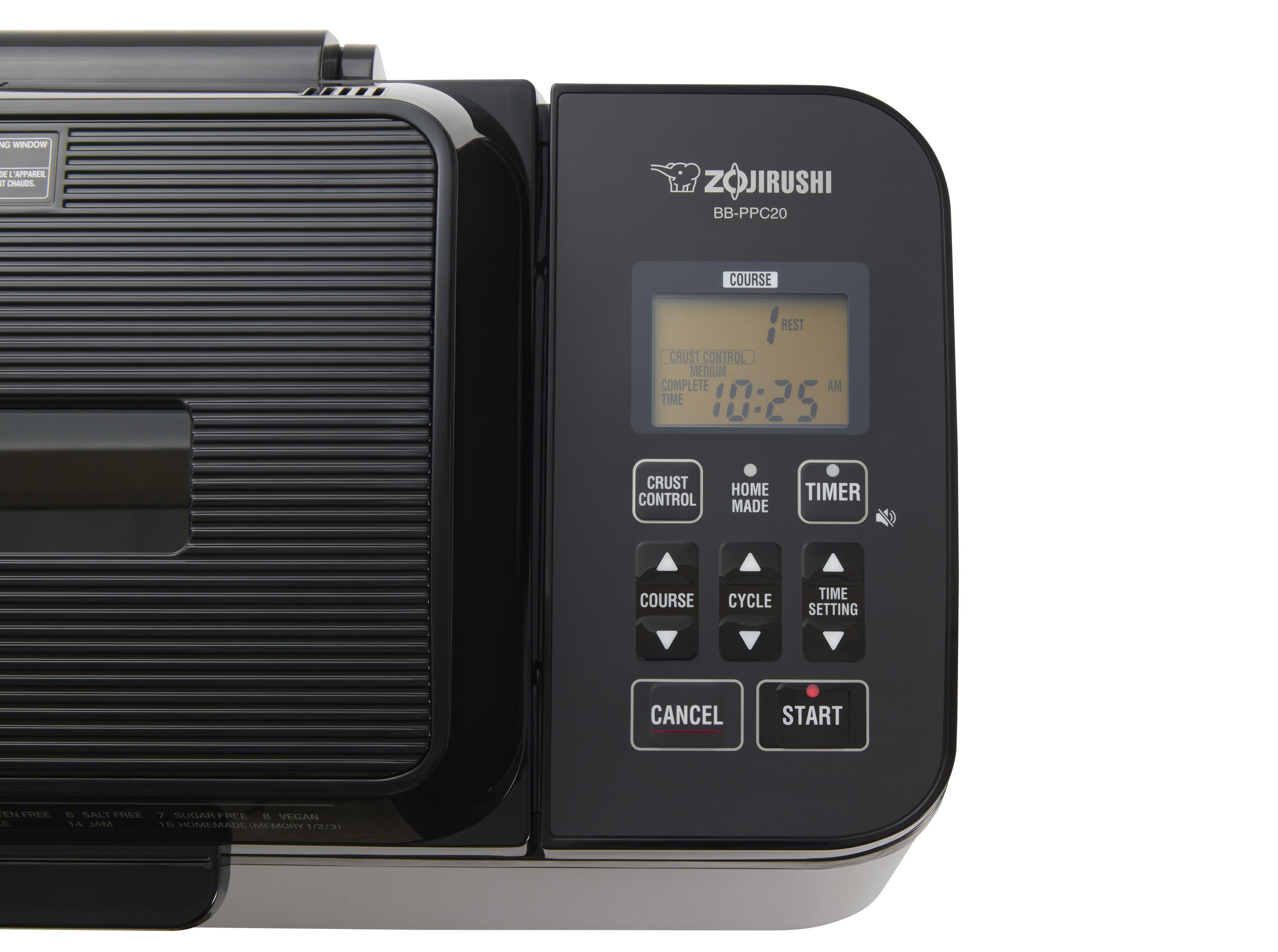
The short answer: the microcomputer. As we covered in last month’s Back to Basics, MICOM technology gives Zojirushi appliances the ability to manage a multi-stage cooking process automatically, adjusting time and temperature at each phase without any input from you. In a breadmaker, that capability is what turns a simple pan of ingredients into a finished loaf.
When you select a course and press start, the breadmaker takes over. Depending on the course and model, it moves through a programmed sequence of stages: a rest period to let ingredients come to temperature, one or more knead cycles to develop the gluten in the dough, rise phases where the yeast ferments and the dough expands, and finally a timed bake. Each stage is calibrated specifically for the type of bread being made. The White course is programmed differently than the Whole Wheat course, the Multigrain course differently than the Gluten Free course, because each type of dough has different requirements for kneading time, rise duration, and baking temperature. The microcomputer manages all of it.
There is also a practical design detail worth knowing: the BB-PPC20 and BB-PDC20 both feature a lid heater that delivers heat from above during baking, so the top of the loaf bakes evenly alongside the sides and bottom. The BB-PPC20, BB-PDC20, and BB-CEC20 all use dual kneading blades, which work together for a better crumb structure.
Course Settings in the Zojirushi Home Bakery Lineup
Each course setting alters the kneading, rise, and bake sequence to match the type of bread being made. Current course options across the lineup include White, Whole Wheat, Multigrain, European, Gluten Free, Vegan, Salt Free, Sugar Free, Sourdough Starter, Dough, Jam, Cake, and Homemade. Select models also offer Crust Control (Light, Medium, or Dark), a Delay Timer, and an Auto Add Dispenser that holds mix-ins like nuts or dried fruit and releases them automatically at the right point in the cycle.
Why Accurate Measuring Matters More in Bread Than Almost Anywhere Else
Bread baking is a chemistry. Every ingredient is in a precise relationship with every other ingredient, and the ratios between them determine how the dough develops, how well it rises, and how the finished loaf turns out. When those ratios are off, even slightly, the results show up clearly: a dense, heavy loaf; a sunken top; a lopsided rise; a crumbly texture.
The most common cause of bread problems in a breadmaker is too much flour. And the most common cause of too much flour is using a measuring cup as a scoop. When you dip a cup directly into a flour bag and pack it, you can easily end up with 20 to 30 percent more flour than the recipe calls for. That extra flour throws off the flour-to-liquid ratio, which produces dough that is too dry to knead properly, rise evenly, or bake through with the right texture.
Two Ways to Measure Flour Accurately
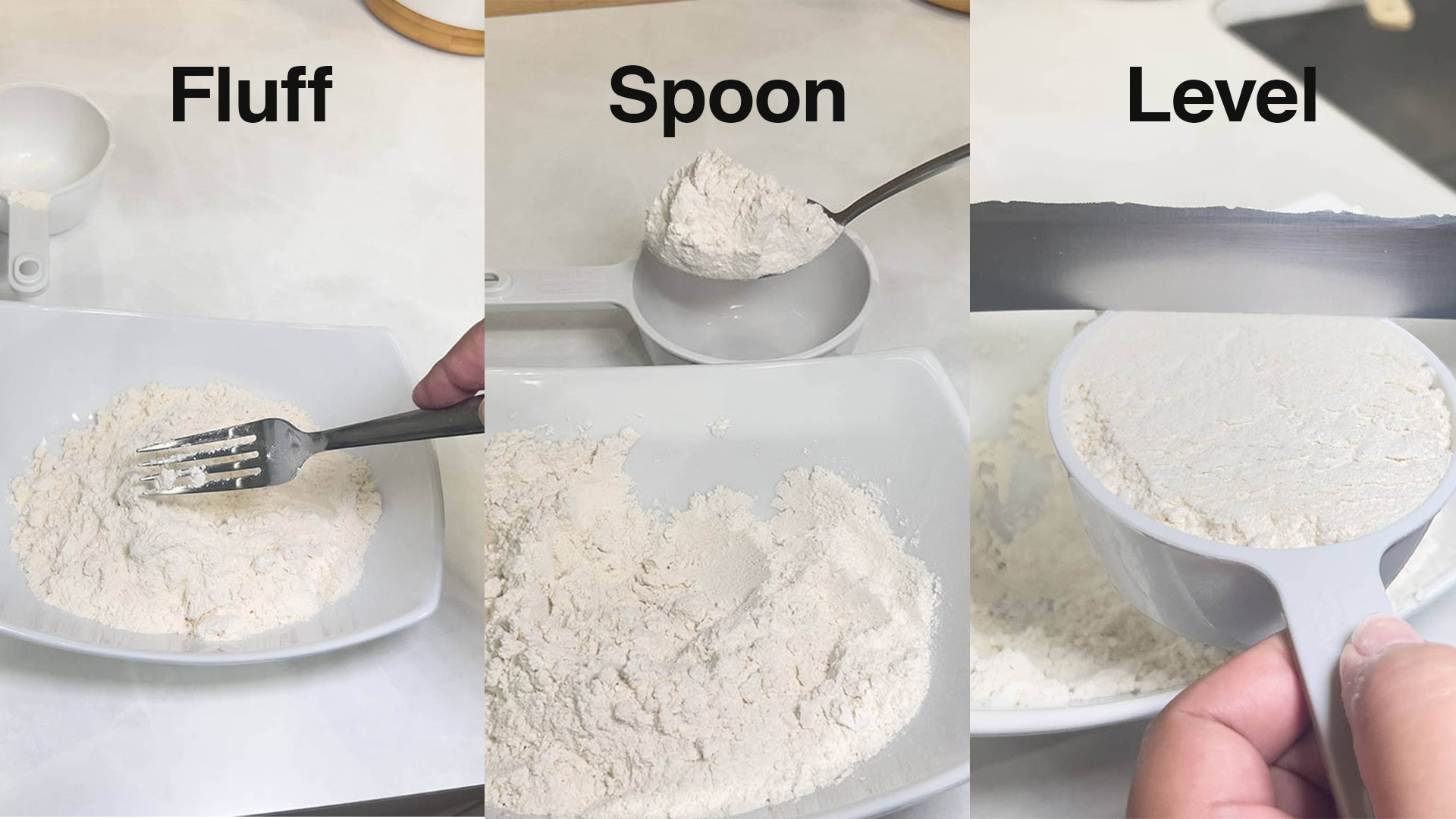
The first method is volumetric: fluff the flour with a fork or whisk to loosen it, then spoon it gently into the measuring cup and level off the top without tapping or shaking. This removes the compaction that causes over-measuring.
The second method is by weight, and it is the most reliable approach. A digital kitchen scale removes the variability entirely. The correct weights for Zojirushi’s recipes are: 128g (4.51 oz.) per cup of bread flour; 120g (4.23 oz.) per cup of whole wheat flour; and 125g (4.41 oz.) per cup of all-purpose flour. When you measure by weight, every batch starts from the same baseline, regardless of how the flour was stored or settled, and the most common causes of a dense, lopsided, or collapsed loaf disappear.
Add Ingredients in the Correct Order
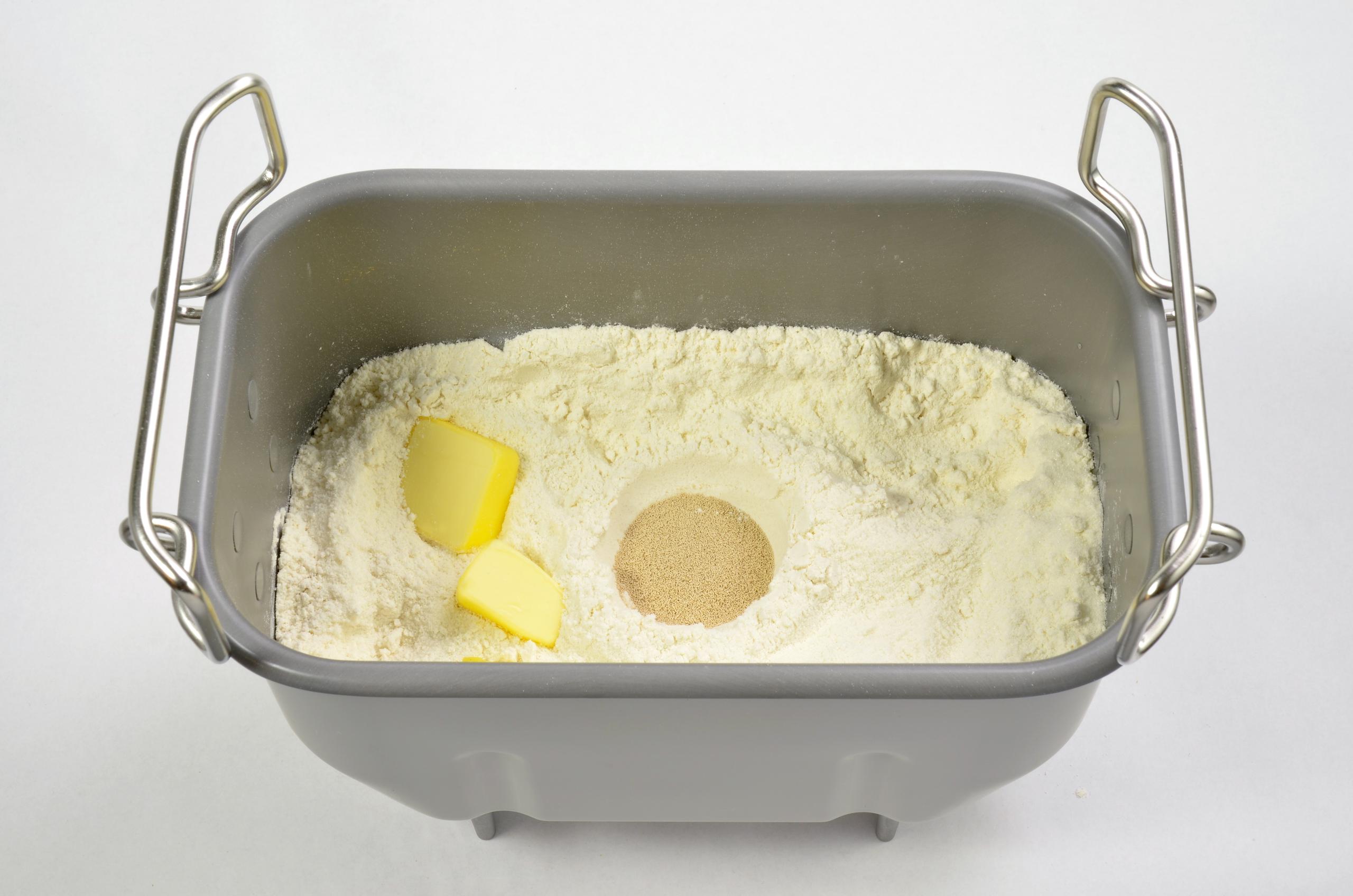
Accurate measuring works hand in hand with correct ingredient order. Zojirushi breadmaker recipes specify the order in which ingredients go into the baking pan, and that order matters. Liquids go in first, followed by dry ingredients, with yeast added last and kept separate from salt until kneading begins. This is especially important when using the Delay Timer: if yeast contacts liquid or salt too early, it can begin to activate or deactivate before the cycle starts. Following the order in your recipe book every time is a simple habit that protects the bake.
The Role of Each Ingredient
Every bread machine ingredient in the bread recipe is doing a specific job. Understanding what each one contributes makes it easier to understand why the ratios matter, and what goes wrong when they are off.
Flour
Flour is the structural backbone of the loaf. The proteins in bread flour, when combined with water and worked by the kneading blades, form gluten, the elastic network that traps the gas produced by the yeast and gives the bread its structure and chew. Bread flour has a higher protein content than all-purpose flour, which is why it produces a better rise and a chewier crumb in yeast breads. Whole wheat and multigrain flours contain the bran and germ of the grain, which contributes flavor and nutrition but also weighs down the gluten network, which is why whole wheat loaves tend to be denser.
Water
Water activates the yeast and hydrates the flour to develop gluten. The temperature of the water matters: too hot and it can kill the yeast; too cold and the yeast activates slowly. Room temperature or slightly cool water is generally best. In the summertime or in warm kitchens, using cooler water helps control the rise, since a warmer environment can cause the dough to over-proof before the bake cycle begins.
Yeast
Yeast is what makes the bread rise. It feeds on the sugars in the dough and produces carbon dioxide gas, which gets trapped in the gluten network and causes the dough to expand. Zojirushi recipes are developed using Rapid Rise yeast (also called Bread Machine Yeast or Instant Yeast), which does not need to be proofed before use. The amount matters: too much yeast and the dough over-rises and collapses; too little and it will not rise enough. Yeast also loses potency over time, so fresh yeast makes a real difference.
Salt
Salt controls the rate of fermentation and strengthens the gluten structure. Without it, the yeast ferments too quickly and the dough over-rises and becomes unstable. Because salt can inhibit yeast when they contact each other directly, it should be added to the baking pan separately from the yeast, which is another reason ingredient order matters.
Sugar
Sugar feeds the yeast and contributes to browning. A small amount of sugar helps the yeast activate and supports a good rise; it also gives the crust its golden color by caramelizing during the bake. Recipes that are low in sugar will produce a lighter, paler crust, which is intentional in certain bread styles.
Fat (Butter or Oil)
Fat tenderizes the crumb and adds richness. It also slows the development of gluten slightly, which is why enriched doughs like milk bread or sweet rolls have a softer, more pillowy texture than lean breads. Fat also helps the bread stay fresh longer by slowing the staling process.
Milk or Milk Powder
Milk adds flavor, richness, and helps the crust brown. Dry milk powder is often used in breadmaker recipes because it adds the same benefits as fresh milk without affecting the liquid ratio in the recipe. It also does not carry the risk of spoiling if the Delay Timer is used.
Your Breadmaker Is Already Doing Most of the Work
The Zojirushi Home Bakery lineup currently includes five models.
The Home Bakery Mini BB-HAC10 and Home Bakery Maestro® BB-SSC10 bake a 1-lb. vertical loaf, with the Maestro® adding an Auto Add Dispenser, Multigrain, Gluten Free, and Vegan courses.
The Home Bakery Supreme® BB-CEC20, Home Bakery Virtuoso® Plus BB-PDC20, and the new Home Bakery Virtuoso® Plus BB-PPC20 (with Ceramic Nonstick) all bake a 2-lb. horizontal loaf with dual kneading blades; the BB-PDC20 and BB-PPC20 also include a lid heater for more even top browning.
All models include a recipe book, measuring cup, and measuring spoon. Once you understand what each ingredient is doing and why accurate measuring matters, consistent results follow. The breadmaker handles the kneading, timing, temperature, and bake. Your job is good ingredients, measured well, in the right order.
Find Zojirushi breadmaker recipes at zojirushi.com and share your bakes with us by tagging @ZojirushiAmerica on Instagram or Facebook using #Zojirushi #ZoFan!


Leave a Reply